Golden Hour Gallery · Collection I
Because It
Was Seen
No one learns to see alone.
Now Open · Free Online Exhibition

About this collection
Now open and free to explore online.
What you’ll explore
How other people shape the way we see: a teacher’s knowledge, a photograph’s promise, a disagreement between friends, and the attention that remains after someone is gone.
Sources & works
Mark Twain’s Life on the Mississippi, the Cottingley photographs, Harry Houdini’s published account and correspondence, and Molly Malone Cook’s photographs alongside Mary Oliver’s writing in Our World. The River artwork and the Gallery’s connecting prose are original interpretations.
Art, books & objects
Physical editions include a hardcover exhibition reader, A Second Look guided writing companion, blank-inside correspondence cards, and The River art print. These editions are available now in the Gallery shop.
Shop Golden Hour Gallery →
Read the sources & image credits →
An inheritance of attention
We inherit ways of noticing.
We inherit more than stories from one another. Someone teaches us to recognize a current, questions what a photograph appears to prove, or notices a small detail we would have passed by.
Afterward, the world looks different. Their attention has become part of our own.
This collection follows that quiet inheritance—through teaching, wonder, disagreement, and love.
Look once. Then allow another life to enter the frame.
01 · Taught
A Surface Becomes
a Language
The river was beautiful before he knew how to read it.
Light crossed the surface. A dark log moved through gold. Rings opened and disappeared. A silver line trembled beneath the shadow of the trees.
To an untrained passenger, these were the river’s pictures: changing, luminous, complete in themselves. To a pilot, they were instructions.

Beside the wheel
The Teacher Enters
Before he became known as Mark Twain, Samuel Clemens was a young man learning to pilot a steamboat. His teacher, Horace Bixby, agreed to teach him the Mississippi between New Orleans and St. Louis.
Clemens first imagined that learning the river would be mostly a matter of steering. Then came the banks, bends, islands, and points: each to be recognized from different approaches, in daylight and in darkness. A familiar shape could look entirely different as the boat moved toward it.
In Life on the Mississippi, he recalled watching experienced pilots study the surface and “read it as if it were a book.” To him, its marks were still unreadable.
Bixby began with a long, slanting line on the water. It marked a reef. What Clemens might have passed over as a change in light became a sign with consequences for the boat.
Before the river could become a language, someone had to show him where to look.
Taught · Reading the water
The First Mark
In Twain’s account, Bixby began the water-reading lesson with a question.
“Do you see that long slanting line on the face of the water?”Horace Bixby, as recalled by Mark Twain
- The line
- Bixby identified a bluff reef: a sandbar with a steep face. Deep water lay close beside it, but very little covered its top. The line on the surface disclosed a sudden change below.
- Its fading edge
- At the upper end, the line began to fray and disappear. Here, Bixby explained, the reef was lower. He pointed out the place where their steamboat could cross.
- The crossing
- The instruction continued at the wheel. Bixby gave the signal, took the other side, and helped Clemens turn the boat across the reef. Seeing the mark was the beginning; learning what to do with it came next.
Clemens was learning to connect a visible mark with something he could not see directly. The teacher’s attention reached beneath the surface—and gave the student a reason to look again.
The line was only the beginning.
Six ways of seeing
The River’s Vocabulary
Once Clemens learned to read the river, small details carried new meanings. In Twain’s account, these are some of the signs a trained pilot could recognize.
| What catches the eye | What the pilot understood |
|---|---|
| A slanting gleam | A bluff reef: a steep sandbar, with shallow water over its top. |
| Rings that boil and tumble | A sandbar breaking down and a channel changing its course. |
| Circles on smooth water | A place growing dangerously shallow. |
| A silver trail in the trees’ shadow | Disturbed water above a newly lodged snag—an obstruction in the boat’s path. |
| A dark log drifting past | A sign of rising water, though loose timber could keep drifting after the rise had stopped. |
| A dead tree with one living branch | A familiar landmark for finding the way at night—and one that would eventually disappear. |
The river did not repeat itself exactly. Remembering meant carrying what another person had taught him—and remaining alert to what had changed.
But learning to read the water changed more than his course.
The same water, seen again
The Same Sunset
He could read what had once astonished him.
Long afterward, Twain could still recall a sunset from his early days on the river. The water shifted from red to gold. A dark log drifted through the brightness; rings of color opened on the surface.
Once he had learned the river, those details carried other meanings. The log suggested rising water. The rings revealed a changing channel. A silver streak beneath the trees warned of a snag.
He could read what had once astonished him. Yet he wrote that the river’s grace and poetry had gone out of it. The knowledge was valuable, and the loss felt real.
The Gallery leaves room for that loss. Being taught to see more does not promise that the first kind of wonder will remain untouched.
And still, in the act of describing what he missed, Twain gave the sunset back to his readers: its colors, its reflections, its changing light.
“I had made a valuable acquisition.
But I had lost something, too.”Mark Twain · Life on the Mississippi (1883), chapter IX
Taught · What remains
What Was Carried
Bixby taught Clemens to recognize what the surface concealed. A line, a ripple, a change in the current could now call another person’s instruction to mind.
Years later, writing as Mark Twain, Clemens set those lessons down. His account preserved both Bixby’s instruction and his own sense of loss. Readers who had never stood beside that wheel could encounter both.
Remembrance can begin while someone is still beside us—in the moment their knowledge changes what we are able to notice. We carry a little of their looking into what comes next.
Reading beside this room · sources & image credits
The historical account and quotations are drawn from Mark Twain, Life on the Mississippi (1883), chapters VI–X. Chapter IX contains Bixby’s reef lesson and Twain’s remembered sunset; chapter X supplies the caution about drifting timber after a rise. Twain’s book is a retrospective account. The reflections on attention and remembrance are the Gallery’s.
“That’s a reef.” is an illustration from the 1883 book, digitized by Project Gutenberg and in the public domain. The River is original interpretive artwork for Golden Hour Gallery (2026), repeated at the entrance, in Taught, and in Afterimage. It is an imagined river, not a historical view of Twain’s Mississippi or an illustration of every pilot’s sign.
Toward the next encounter · Offered
Once we have learned to look for meaning, what happens when an image offers us something we long to see?
02 · Offered
What the Photograph
Could Hold

Reproduced in Arthur Conan Doyle’s The Coming of the Fairies (1922). Digitized by Project Gutenberg.
Look before the verdict arrives.
Four small figures dance before Frances Griffiths. One lifts a flute toward its mouth. Behind them, water moves through Cottingley Beck.
Frances does not turn toward the dancers. She looks into the camera.
The photograph asks for a decision before it supplies an explanation.
Before the world was watching
Two Girls at the Beck
In 1917, cousins Frances Griffiths and Elsie Wright lived in Cottingley, West Yorkshire. Frances returned from the beck with wet shoes and spoke of the fairies there. The adults did not believe her.
The girls borrowed Elsie’s father’s camera and returned with a photograph that appeared to show what they had described.
Later that year, they made a second image: Elsie seated in the grass, a small winged figure leaning toward her hand.
At first, the photographs belonged to the scale of family life: two girls, a stream, an unconvinced household, and an answer made together. The camera gave their private claim a form that could travel without them.

Reproduced in The Coming of the Fairies (1922). Digitized by Project Gutenberg.
Before the photographs became evidence, they were an offering between children and adults.
Offered · imagination enters matter
What the Girls Made
Elsie and Frances were makers as well as the subjects of these photographs. Drawing, borrowed illustrations, paper figures, and carefully arranged scenes gave their imagined world a visible form. Elsie’s surviving fairy artwork belongs to this story too.
- The drawing
- Some of the figures drew on illustrations in Princess Mary’s Gift Book. Borrowed imagery became material for a scene of the girls’ own.
- The cutout
- Drawn figures became paper cutouts. Hatpins held them among plants and branches, giving a flat image a place in the physical world.
- The exposure
- The camera recorded the arrangement. A plate could show no sign of darkroom alteration and still record an arranged scene.
From a household to the world
When the Image Left Them
The photographs acquired a public life through adults who brought their own questions, convictions, and authority to them.
- 1917
- Elsie and Frances make the first two photographs with Elsie’s father’s camera. Within the family, belief and skepticism coexist.
- 1919
- Elsie’s mother brings the photographs into a discussion of fairy life. They begin to circulate through Theosophical circles, eventually reaching Edward Gardner.
- 1920
- Gardner seeks technical opinions and supplies cameras and marked plates. The girls make three more photographs. That winter, Arthur Conan Doyle brings the story to readers of The Strand Magazine.
- 1922
- Doyle publishes The Coming of the Fairies, gathering photographs, letters, and testimony into a book that argues for their authenticity.
The checks could establish which plates had been used. They could not establish that the figures in front of the lens were living beings.
Once an image enters the world, its makers do not remain its only authors.
The viewer brings a life
Doyle’s Gaze
Doyle encountered the photographs in 1920. His interest in Spiritualism was already longstanding. War and personal loss deepened the stakes of his convictions; they did not account for their whole history.
He knew photographs could be fabricated. He pursued correspondence, testimony, and technical examinations, and trusted Gardner’s inquiries into the girls and their circumstances. Some photographic experts remained unconvinced.
In The Coming of the Fairies, Doyle assembled a record and invited readers to judge it. His own conclusion was clear. He believed the images disclosed a form of unseen life, while distinguishing that claim from proof of survival after death.
The photographs did not persuade Doyle alone. Doyle helped determine what the photographs would be allowed to mean.
What the record can tell us
Their Later Accounts
Decades later, both women described using cutouts and hatpins to make the first four photographs. Their accounts parted at the fifth. Elsie included it among the constructed images; Frances continued to insist that it showed real fairies.
Those accounts belong beside the photographs. They tell us about the making, while leaving a disagreement between the women who made them.
The same image, seen again
The Photograph Again
The explanation has arrived. The wonder is not obliged to leave.
1922 book reproduction, digitized by Project Gutenberg.
Looking again, we might attend to more than the question of deception: the girls’ artistry, the experience Frances claimed, and the expectations adults brought to their pictures.
What did the girls ask the world to see—and what did the world ask their photographs to prove?
A note from the scenographer
The Second Look
I first encountered these photographs at the age when wonder and evidence had not yet agreed to be enemies. Learning how they were made did not erase what they opened. It only changed where I understood the wonder to reside.
Remembrance can keep faith with that earlier encounter while allowing us to understand it differently.
The second look need not punish the first.
Reading beside this room · sources & image credits
The contemporary record. Arthur Conan Doyle, The Coming of the Fairies (New York: George H. Doran, 1922), especially the preface and chapters I–II. Read here as a record of Doyle’s argument, correspondence, and the investigations he reported—not as proof of fairies.
The later account. National Science and Media Museum, the museum’s account of the Cottingley Fairies. The museum recounts the cutouts, hatpins, admissions in the 1980s, and the cousins’ differing accounts of the fifth photograph.
Elsie’s drawings. Science Museum Group, Cottingley Fairies, watercolor paintings, collection reference 1998-5145. The catalog preserves evidence of Elsie’s artistic work and the photographs’ early circulation.
Photographs. Elsie Wright, Frances and the Fairies (July 1917), and Frances Griffiths, Elsie and the Gnome (September 1917). These are digitized book reproductions from the 1922 volume, supplied by Project Gutenberg, rather than scans of the original camera negatives. Both are shown in full; the first is repeated unchanged.
The interpretive passages and scenographer’s note belong to the Gallery. They are not quotations from the girls or from Doyle.
Toward the next encounter · Disputed
What happens when two people bring affection, expertise, grief, and hope to the same encounter—and do not witness the same event?
03 · Disputed
The Message
Between Them
Who has the authority to recognize a message offered in the voice of someone we loved?

Frontispiece to Houdini’s A Magician Among the Spirits (1924). Digitized by Project Gutenberg.
Before the Message
Houdini and Doyle met in 1920. Their friendship grew through visits, letters, shared meals, family time, and sustained argument. Both knew the demands of public life and the power of an impossible story.
Doyle believed that human personality survived death and that communication across that boundary was possible. Spiritualism was a religious, intellectual, and public commitment.
Houdini knew how impossible things were produced. His experience of illusion and staged séance effects gave him reasons to question what others accepted.
Yet disbelief was not indifference. His mother had died in 1913. In his later account, he described a longing for contact that existed alongside his demand for evidence.
They brought different kinds of knowledge to the same hope.

Library of Congress, Rare Book and Special Collections Division. LC-USZ62-112427.
The person he knew
Cecilia Steiner Weiss
Before she became the voice claimed by a message, Cecilia was a person her son knew.
Houdini remembered returning from long journeys to spend months with her. He remembered wearing clothes she had given him because he thought it would make her happy. He remembered resting his head against her breast to hear her heart beat.
He preserved these particulars in his account of the sitting: habits, gestures, a familiar nearness.
A communication offered in her name would have to meet more than his knowledge of illusion.
It would have to meet his knowledge of her.
The person Arthur trusted
Jean Conan Doyle
Lady Jean Conan Doyle practiced automatic writing: writing understood within the Doyles’ Spiritualist faith as communication guided by spirits.
Arthur trusted her character and the integrity of her mediumship. A message received through her carried the weight of that trust.
Houdini later recorded that his wife, Bess, had spoken with Jean the previous evening about his devotion to Cecilia, sharing intimate details of their relationship.
That conversation does not establish a conscious plan to deceive. It does establish that the message did not enter an empty room.
Before the first word was written, the room already held what each person knew, hoped, and trusted.

Bain News Service. Library of Congress, Prints and Photographs Division. LC-DIG-ggbain-34152.
Atlantic City · mid-June 1922
The Sitting
Three people. A table. A message offered in a mother’s voice.
In Houdini’s later account, Arthur invited him to the Doyles’ suite at the Ambassador Hotel. Jean felt she might receive a message for him. Bess did not join them.
The shades were drawn. Pencils and a writing pad lay on the table. Arthur began with prayer. Houdini insisted that he had entered the sitting with hope.
“I was willing to believe,
even wanted to believe.”Harry Houdini · A Magician Among the Spirits (1924), p. 152
Jean began writing. As each sheet was completed, Arthur passed it to Houdini. The communication offered a mother’s love, blessing, reassurance, and the promise of reunion.
Houdini waited for recognition.
It did not come.
A message may contain tenderness and still fail to contain the person whose voice it claims.
Disputed · the act of recognition
The Same Pages,
Two Readings
The pages did not divide the room because one man cared and the other did not. They divided it because each understood recognition differently.
Sincerity
Doyle read
Jean’s character and the intensity of the sitting formed part of the evidence. He trusted the person through whom the words had come.
Houdini read
Sincerity could not make the message recognizable if its voice and particulars did not resemble his mother.
Emotion
Doyle read
Houdini’s response seemed to show that the message had reached him. What Doyle saw in his friend strengthened his belief.
Houdini read
His emotion came from longing and the effort to sense his mother. Being moved did not mean he had recognized her in the words.
A name
Doyle read
When Houdini wrote “Powell,” Doyle understood it as a sign from his recently deceased friend, Ellis Powell.
Houdini read
He said he was thinking of his living friend Frederick Eugene Powell, whose health and affairs were on his mind. He called the overlap a coincidence.
A voice
Doyle read
According to Houdini, Doyle explained that spirits could continue learning after death. Cecilia could have learned English.
Houdini read
Houdini wrote that his mother could not read, write, or speak English. A message entirely in English did not sound like her.
These paired readings paraphrase Houdini’s published account and the correspondence he reproduced. They are not a transcript of the sitting.
Who Could Say What He Had Felt?
Doyle believed his friend’s visible response belonged to the evidence. Houdini insisted that the meaning of his emotion belonged to him.
The disagreement crossed an intimate boundary. Could a friend’s observation tell him what his own response meant? Could the son who knew Cecilia accept a message in which he did not recognize her?
Evidence may be shared. Recognition cannot always be transferred.
After the sitting
What Affection
Could Not Bridge
Houdini left without telling the Doyles that the message had failed for him. The disagreement unfolded afterward, in letters and in public.
Arthur to Harry · 19 November 1922
“I have no fancy for sparring with a friend in public.”
Doyle could not reconcile Houdini’s claim of receiving no evidence with what he believed he had witnessed. He defended Jean’s mediumship and returned to the name Powell.
Yet he also left a place for friendship: there were other subjects on which they could still meet.
Harry to Arthur · 15 December 1922
“I hold both Lady Doyle and yourself in the highest esteem.”
Houdini explained the language of the message, his understanding of Powell, and the emotion he had felt while trying to sense his mother.
He asked Doyle to receive that explanation in the same good faith with which he had written it.
Letter excerpts reproduced in A Magician Among the Spirits (1924), pp. 156–158. Shown here as typeset quotations, not facsimiles of the manuscript letters.
The sitting was not the instant end of their friendship. Correspondence and public arguments continued. The difference widened until affection could no longer contain it.
They tried to preserve the friend after they could no longer preserve a shared account of the world.
Two friends, preserved together in the frontispiece to Houdini’s 1924 book.
Disputed · what remained
The Riddle That Remained
Houdini continued to expose mediumistic methods while insisting that convincing evidence could have changed his mind.
Doyle continued to defend Spiritualism. After Houdini’s death, he developed his speculation that some of the magician’s extraordinary performances had involved psychic powers Houdini denied or concealed.
Each tried to explain what the other could not—or would not—see.
They did not disagree about whether wonder mattered. They disagreed about what wonder was permitted to prove.
Houdini searched the offered message for the unmistakable presence of someone he loved. He did not find her there.
Reading beside this room · sources & image credits
The sitting and the letters. Harry Houdini, A Magician Among the Spirits (Harper & Brothers, 1924), chapter IX, especially pp. 150–158. This is a participant’s retrospective account, published amid the dispute. The paired readings draw on that account and the letters reproduced within it. Reflections on recognition and remembrance are the Gallery’s.
A date that remains unsettled. Houdini gives 17 June 1922 and identifies it as his mother’s birthday. The Harry Ransom Center’s chronology gives 18 June. This room therefore uses “mid-June.” Houdini’s objection that the message omitted her birthday should be understood as his claim within that disputed chronology.
The mark on the page. Houdini records Jean drawing a cross. The symbol alone cannot establish her intention or stand in for Cecilia’s whole religious life. No original séance sheets are reproduced here.
The widening disagreement. PBS American Experience’s account of Conan Doyle and Houdini provides further context. Doyle’s later speculation appears in “The Riddle of Houdini,” collected in The Edge of the Unknown (1930); it is presented here as Doyle’s belief.
Photographs. The Auto Club portrait is the frontispiece to Houdini’s 1924 book, digitized by Project Gutenberg. The photographs of Cecilia with Houdini (LC-USZ62-112427) and Jean Conan Doyle (LC-DIG-ggbain-34152) are from the Library of Congress, which lists no known restrictions on publication for either. All images retain their full frames; the Auto Club portrait is repeated unchanged.
Toward the next encounter · Carried
A person may be absent and still remain within what another person is able to see.
04 · Carried
Some of What I See
Began With You
How does another person remain within the way we notice the world?

Photograph by Molly Malone Cook, from Our World (Beacon Press, 2007).
Original negative held in the Molly Malone Cook papers, SSC-MS-00595, Smith College Special Collections.
Online reproduction via The Marginalian.
Begin with
the looking
Before the story of the two women, there is this small moment: a beach, a smile, a hand holding something found.
Someone came close enough to notice. Someone chose where to stand, what to include, when to press the shutter.
The photograph preserves a moment that neither person could have known we would enter, years later.
Every photograph says: this entered someone’s attention.
The person behind the camera
Molly Malone Cook
Photographer. Gallery owner. Advocate.
Cook was among the early photographers at The Village Voice. Her subjects included Lorraine Hansberry, Norman Mailer, Walker Evans, and Robert Motherwell. In 1960, she opened a gallery devoted to photography.
She championed other makers, including Berenice Abbott, Edward Steichen, and Minor White. Through the camera and the gallery, she made a public life in art.
Her photographs ask us to encounter that life on its own terms: the distance she chose, the gestures she noticed, the people whose presence she kept.

Photograph by Molly Malone Cook · Our World.
Reference reproduction via The Marginalian.
She did not enter history only by being loved.
She entered it looking.
A shared world
A Life of Looking
Beside One Another
One wrote. One photographed.
Those verbs do not describe separate rooms.

Photograph by Barbara Savage Cheresh, from Our World (Beacon Press, 2007). Photographer credit: Beacon Press.
Online reproduction via The Marginalian.
They met at Steepletop, the former home of Edna St. Vincent Millay, and shared more than forty years together, much of that life in Provincetown.
Cook also became Oliver’s literary agent. Their work remained distinct, but it grew within the daily presence of another attentive person.
In Our World, Oliver would describe how watching Cook work—and watching her meet both friends and strangers—deepened her understanding of attention.
We cannot recover the whole of a private life from photographs or a book. We can notice what Oliver chose to acknowledge: that another person had changed the way she looked.
A shared world is made not once,
but by what two people keep noticing together.
What one person teaches another
Attention Becomes Care
“to see, with searching attention and compassion.”Mary Oliver · Our World
Brief excerpt reproduced on Beacon Press’s Mary Oliver site
Oliver’s account reaches beyond learning to notice more. Cook helped her attend more fully to the human world, with feeling for the people within it.
Attention is not automatically tenderness. A camera can flatten a person into a type. A story can turn a life into a lesson before it has allowed that life to be particular.
Care asks something more of the viewer: patience with what the image does not tell, and restraint in what we claim to know.
- Look once
- What did you decide about the person in the photograph at first glance?
- Stay
- Notice a hand, a posture, the distance between the camera and its subject. Let a detail interrupt your first impression.
- Leave room
- What remains outside the frame? What belongs to this person that the photograph cannot give you?

Beacon Press · first published 2007
Cover image from the publisher.
The object that carries
Our World
Cook died in 2005. Published two years later, Our World brings forty-nine of her photographs and selections from her journals into conversation with Oliver’s prose and poetry.
The book holds several kinds of trace: the image Cook made, the words she left, the memories Oliver could gather afterward.
They do not become interchangeable. A photograph is not a complete account of its maker. Remembrance does not make a shared life entirely knowable.
But the work can still be encountered. Cook’s name remains beside her photographs. Oliver’s writing tells us something of what it meant to live near the person who made them.
Remembrance does not restore the world.
It makes a place where what remains can still be encountered.
After absence
The Person Is Still Gone
There is a cruelty in speaking too easily about what loss gives us.
Absence does not become worthwhile because someone finds beautiful words for it. Attention cannot replace a voice, an argument, a hand, a presence in the next room.
To say that Cook remained within Oliver’s way of seeing is not to say that she remained completely.
It is to name something smaller: a relation that continued to have consequences. A habit of waiting. A willingness to come closer. A human detail that might once have gone unnoticed.
What remains is not the whole person.
It is one of the ways the person is still happening.
The photograph, seen again
Look Again
My first clam, 1964.
Photograph by Molly Malone Cook, from Our World (Beacon Press, 2007).
Original negative held in the Molly Malone Cook papers, SSC-MS-00595, Smith College Special Collections.
Online reproduction via The Marginalian.
Cook saw the subject.
Oliver saw Cook’s seeing.
Now you stand within that relay.
The beach has not changed. Neither has the gesture or the smile. What has changed is what you bring to the photograph.
You know something of its maker’s work. You have encountered the shared life around it, and the book through which Oliver remembered her.
Let that knowledge bring you closer without making the image explain everything. The person in front of the camera, and the person behind it, still exceed the story we can tell.
Carried · what remained
What Remembrance Keeps
Sometimes we remember a face. Sometimes a voice. Sometimes we discover the memory in an action: the way we pause before naming, or bend toward something small.
Years later, we look toward the world in a way that began between us.
The person is not contained in the photograph, the flower, or the light. The relation remains present in how we attend.
Remembrance is the afterlife of attention.
Reading beside Carried · sources & image credits
Cook’s work. Beacon Press’s biography of Molly Malone Cook documents her photographic career, gallery, and work as a literary agent. The publisher’s page for Our World describes the book, identifies photographic subjects and artists Cook championed, and supplies the brief Oliver excerpt used here.
A shared life and a book. PBS American Masters on Oliver and Cook’s meeting provides context for Steepletop and their long partnership. Our World was first published by Beacon Press in 2007; the current publisher listing is for the 2009 paperback.
Photographs. My first clam (1964) and the boy with a telescope (New York, late 1950s) are by Molly Malone Cook, reproduced from Our World in The Marginalian’s illustrated review. That review also supplies the photograph of Cook and Oliver at their Provincetown home. Beacon Press identifies its photographer as Barbara Savage Cheresh. The opening photograph is repeated with the same full frame. The book cover comes from Beacon Press’s Mary Oliver site.
Working image note. These are reference reproductions for the disabled draft. Smith College Special Collections has stated that no additional institutional permission paperwork or licensing fee is required under its stated policy; fair-use assessment and other creators’ rights remain the researcher’s responsibility. Final source files and the basis for reproducing the shared portrait remain under review. The portrait is by Barbara Savage Cheresh; Smith’s statement about works created by Cook and Oliver does not establish rights in Cheresh’s photograph. See Smith’s published guidance.
The gallery’s reading. Apart from the clearly attributed Oliver excerpt, the interpretive language in this encounter is the gallery’s own. It does not claim to describe all of Cook’s life or all of Oliver’s influences.
Toward the next encounter · Afterimage
The historical material falls away.
What remains is the way you look.
Afterimage
What Remains
An afterimage is not the thing that made it.
It is the eye continuing to answer light.
Remembrance does not return a person, a moment, or a world unchanged. It is one way a life continues to answer what was given.
What remains is not the whole of what was there.
It is evidence that looking had consequence.
Look again.
The subject may not have changed.
You may have.
An inheritance of attention
No One Learns
to See Alone.
Before you knew what to call attention, someone directed yours.
Someone showed you which difference mattered. Someone asked you to look again when certainty arrived too quickly.
Someone treated a small thing as worthy of approach. Someone loved what you had not yet learned to notice.
Their attention did not become yours intact. It met your own life, changed there, and continued.
Some of what you see began with someone else. Some of what another person sees may begin with you.
Seeing becomes inheritance when attention passes between people.
An attention of his own
Through Scott’s Eyes
My father, Scott Gray, moves through the world with a quiet gentleness, noticing things many of us pass by. His photographs of birds, flowers, water, mountains, and the changing sky offer a glimpse of that attention. When I look at them, I recognize something of him: his patience, his tenderness, his way of finding beauty without asking it to announce itself. Sharing these photographs is a way of sharing a little of the person I love, and the world he helps me see.
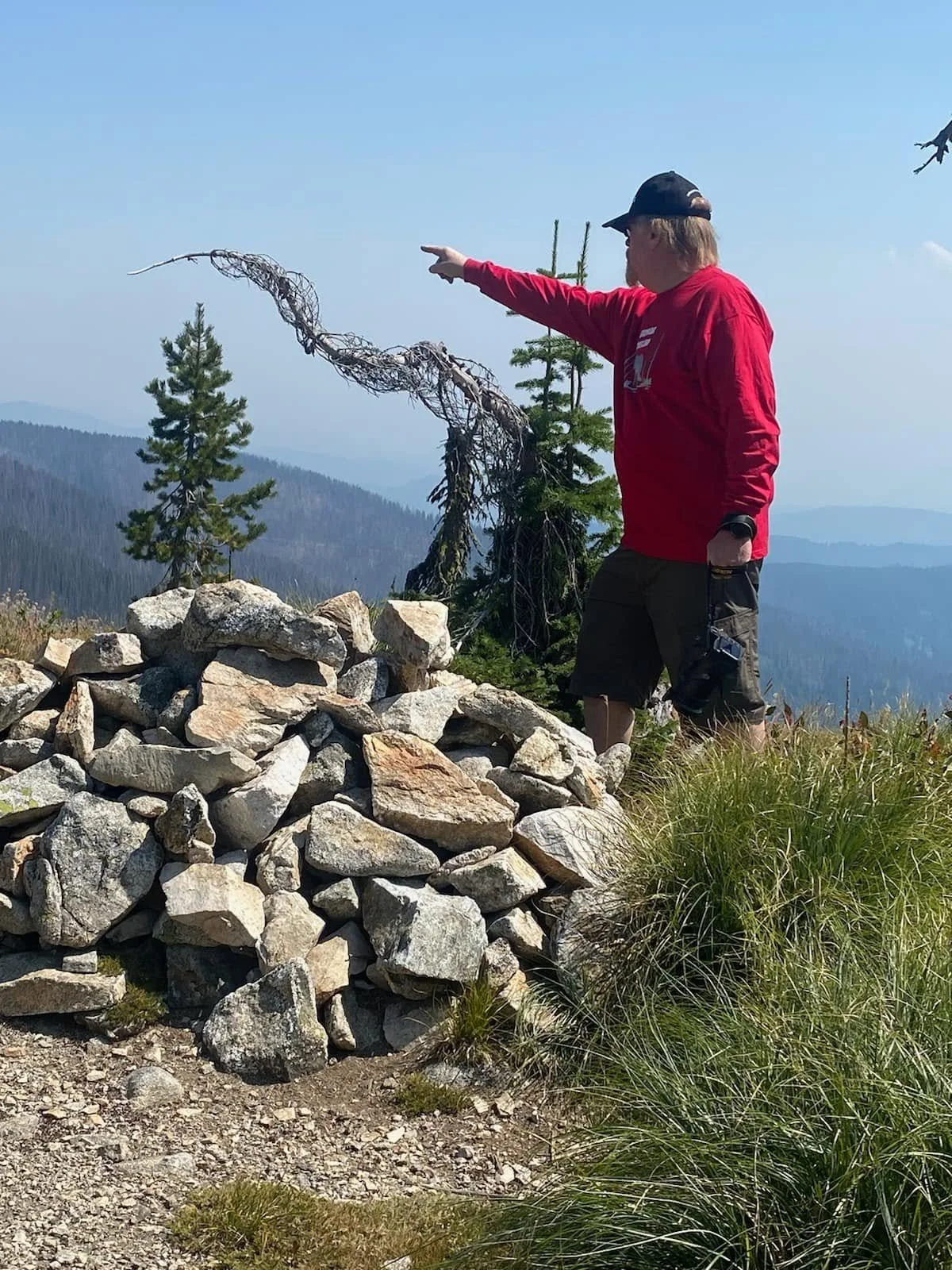
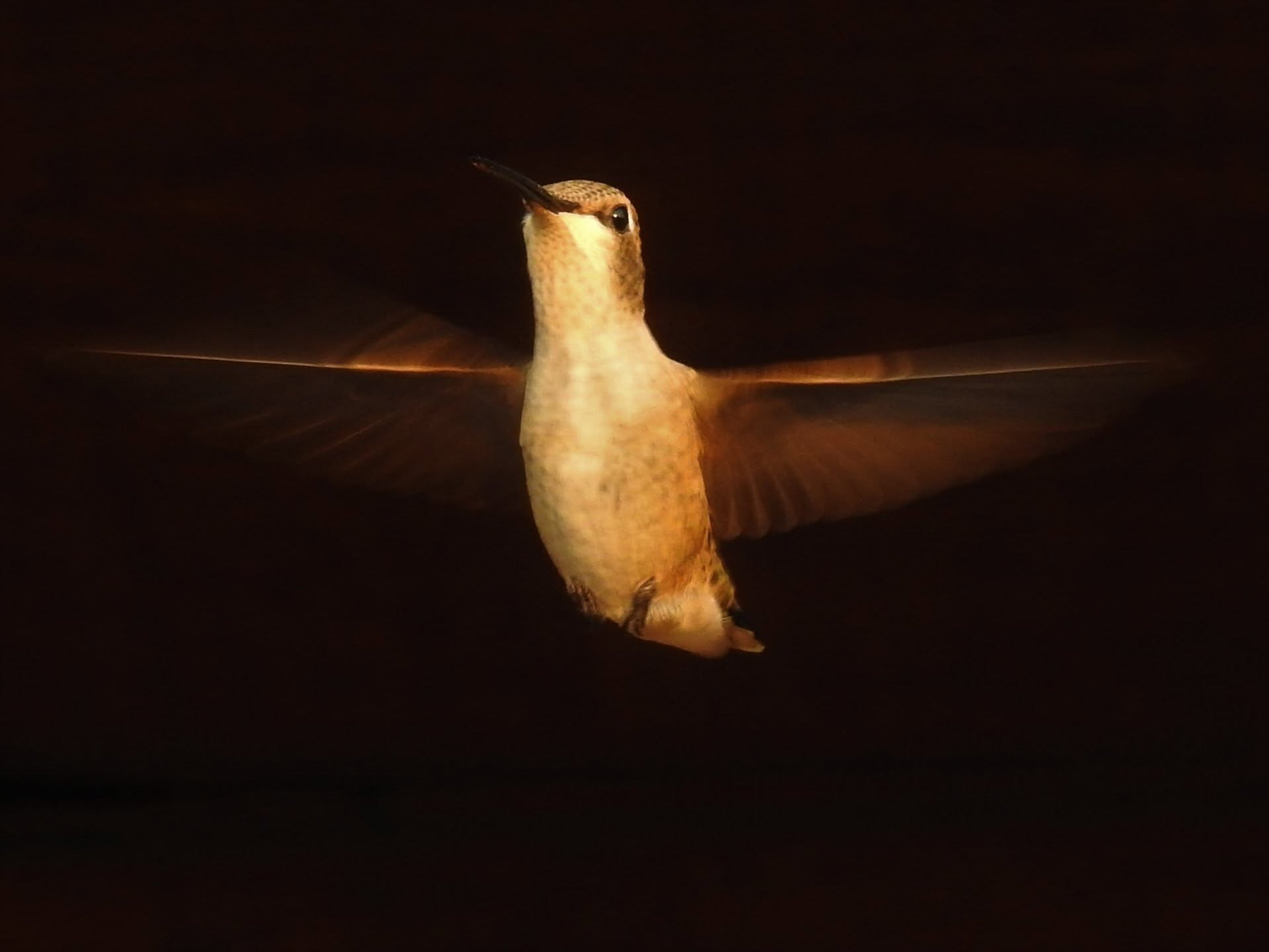


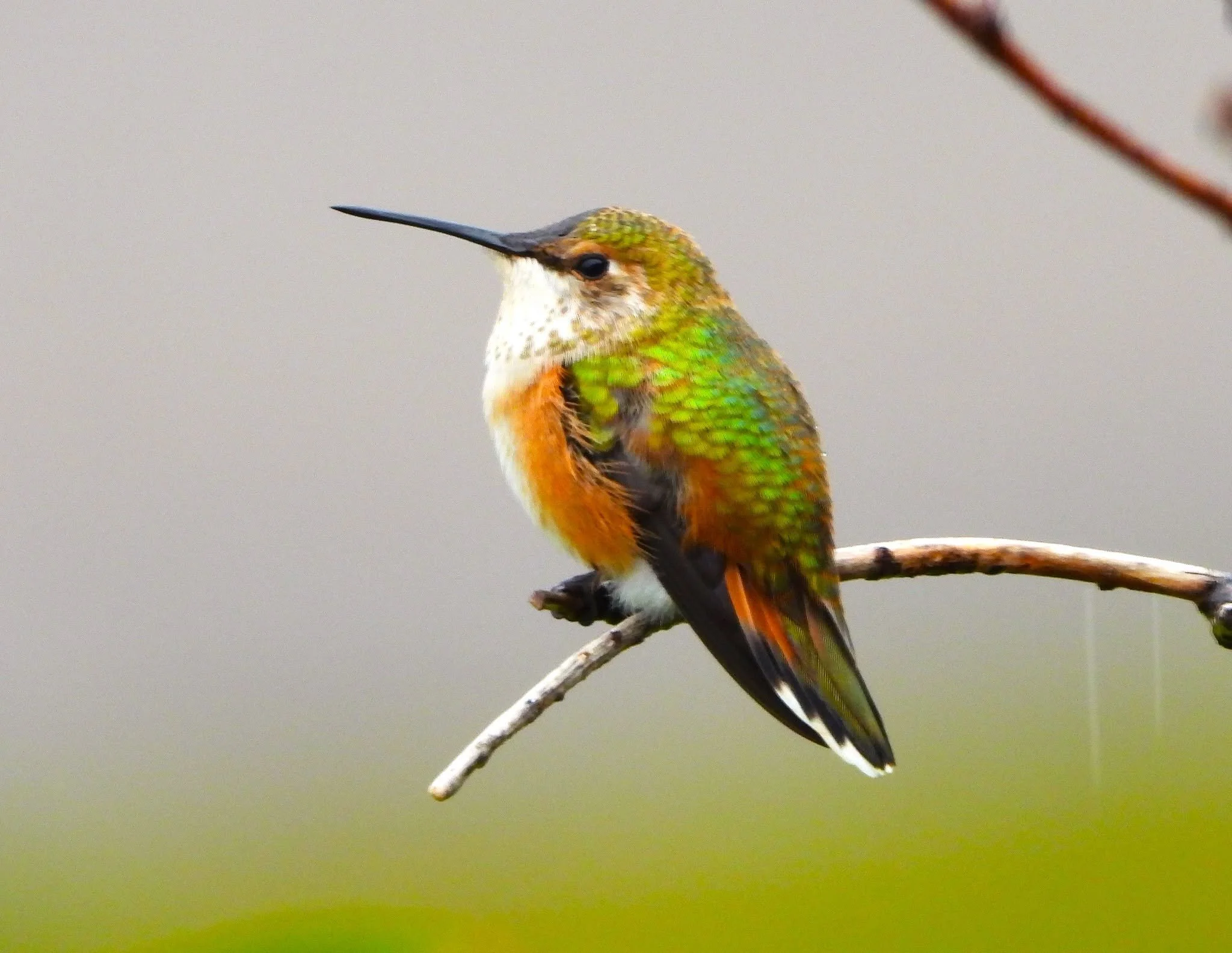
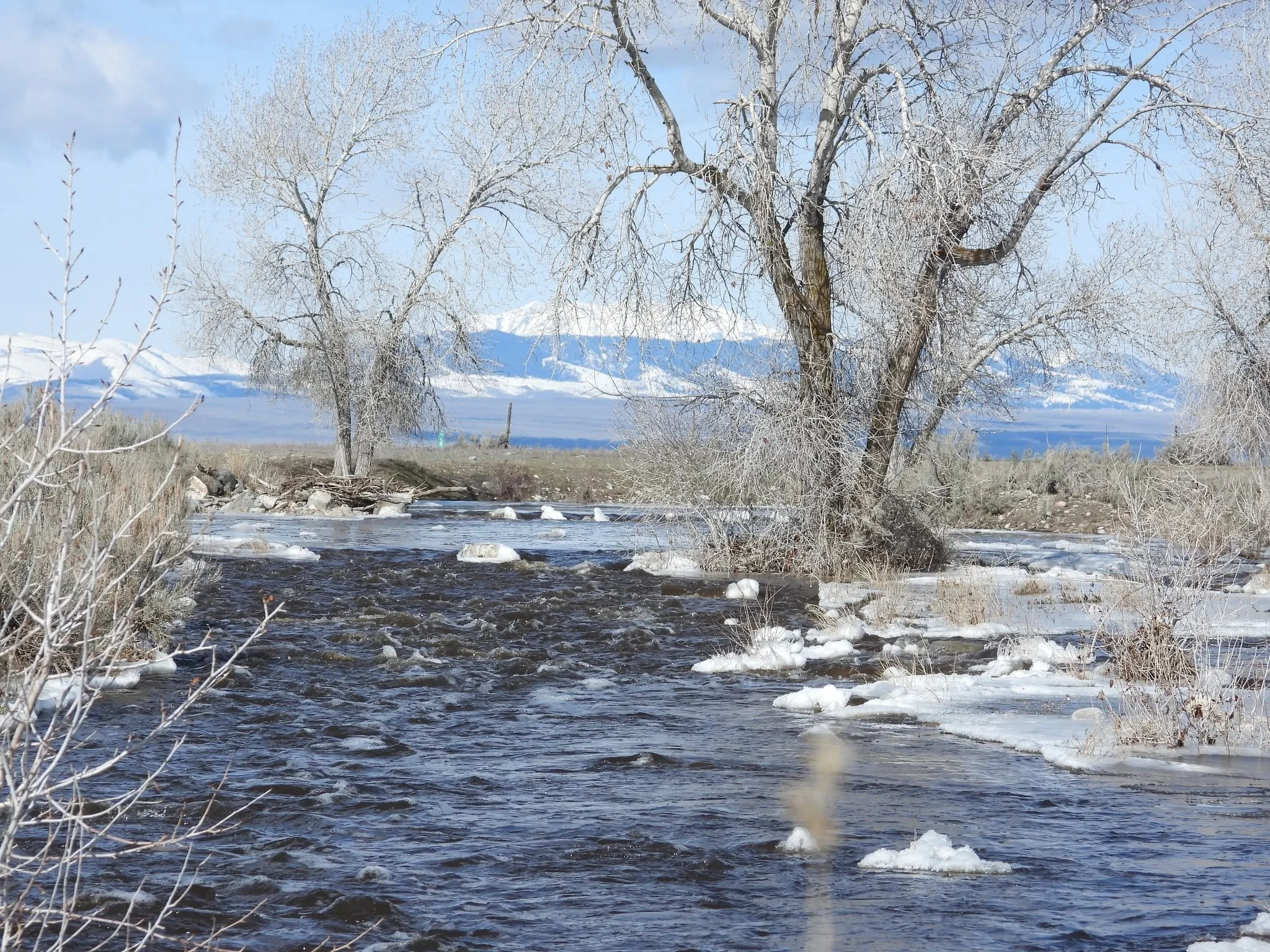
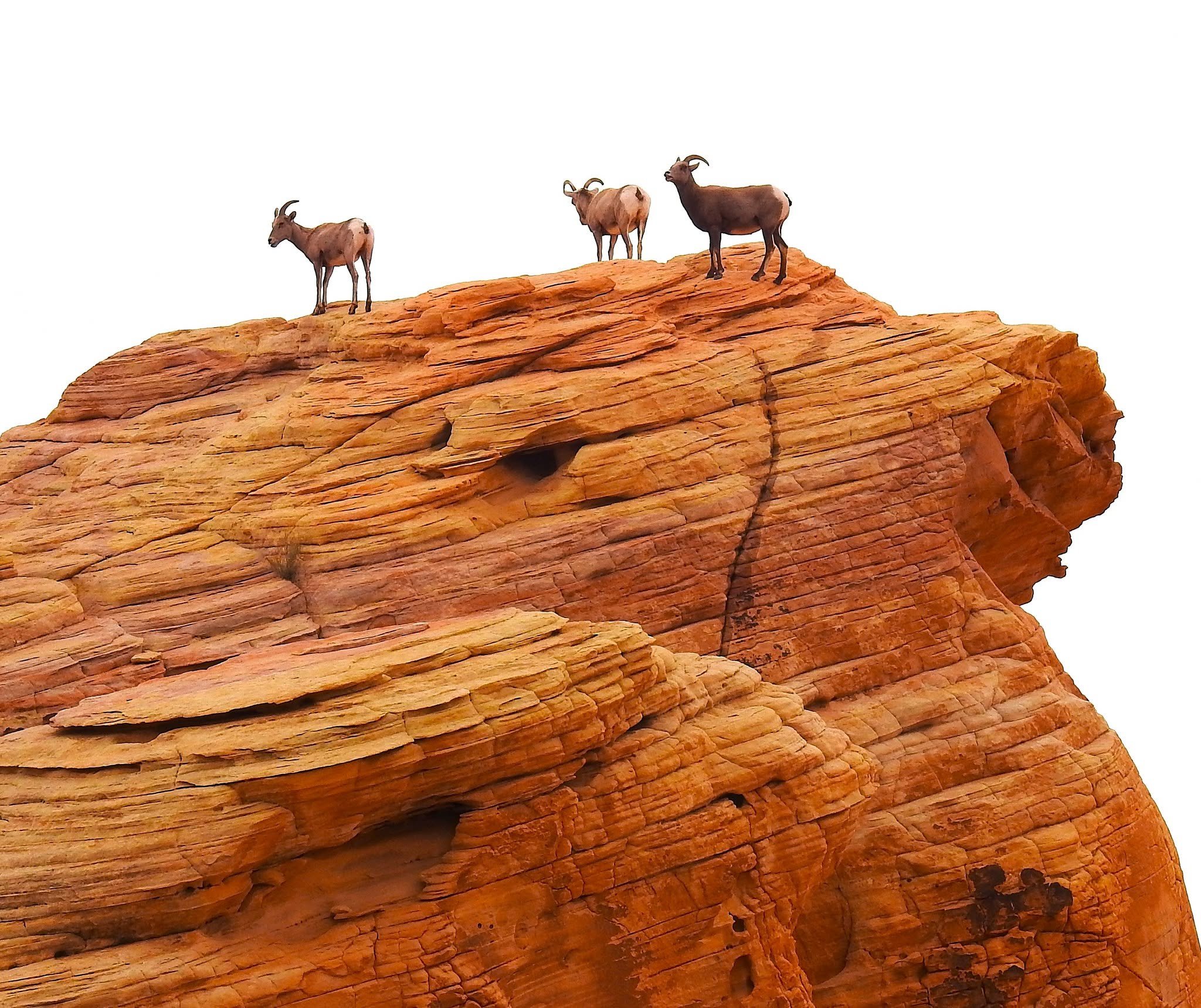

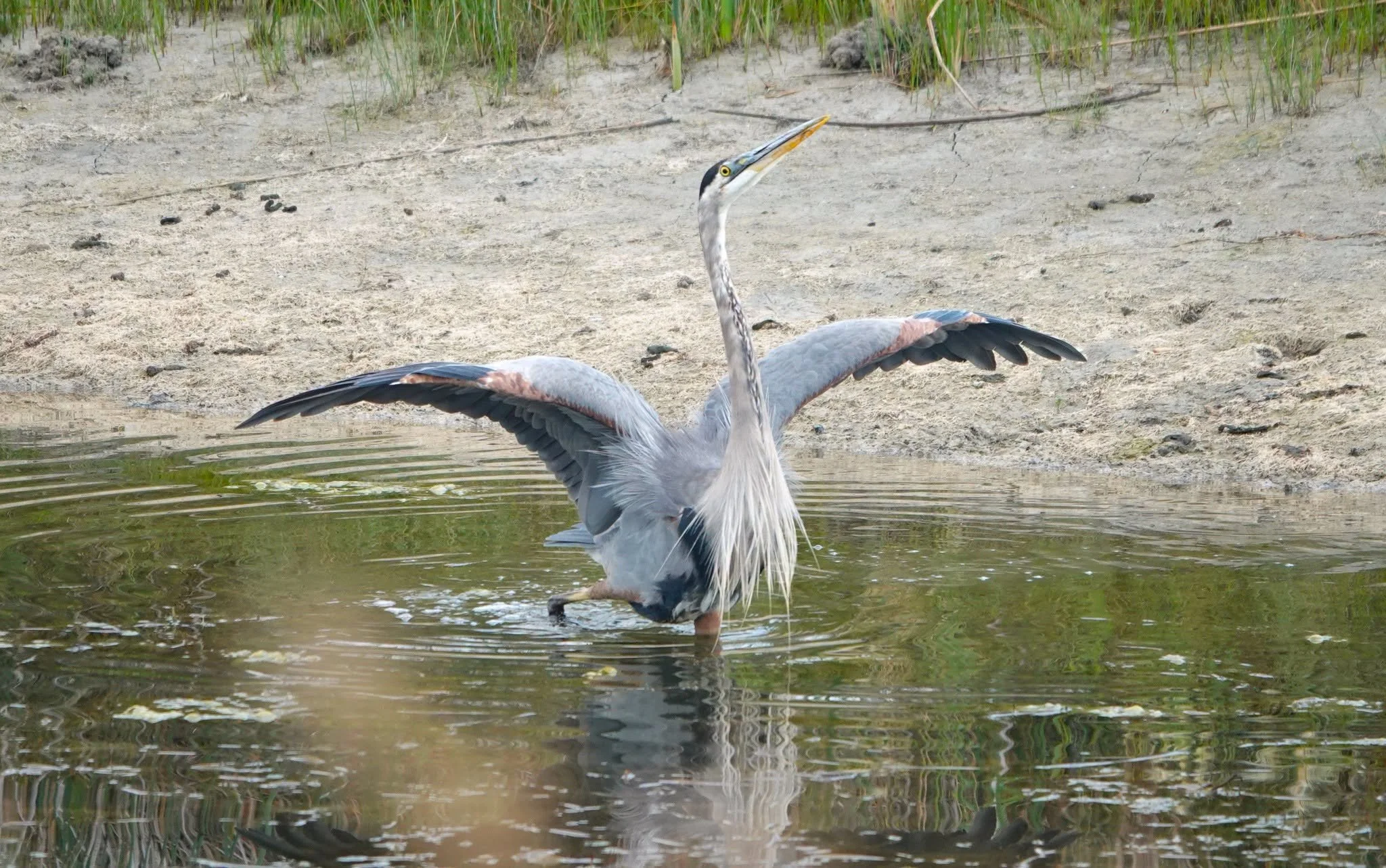
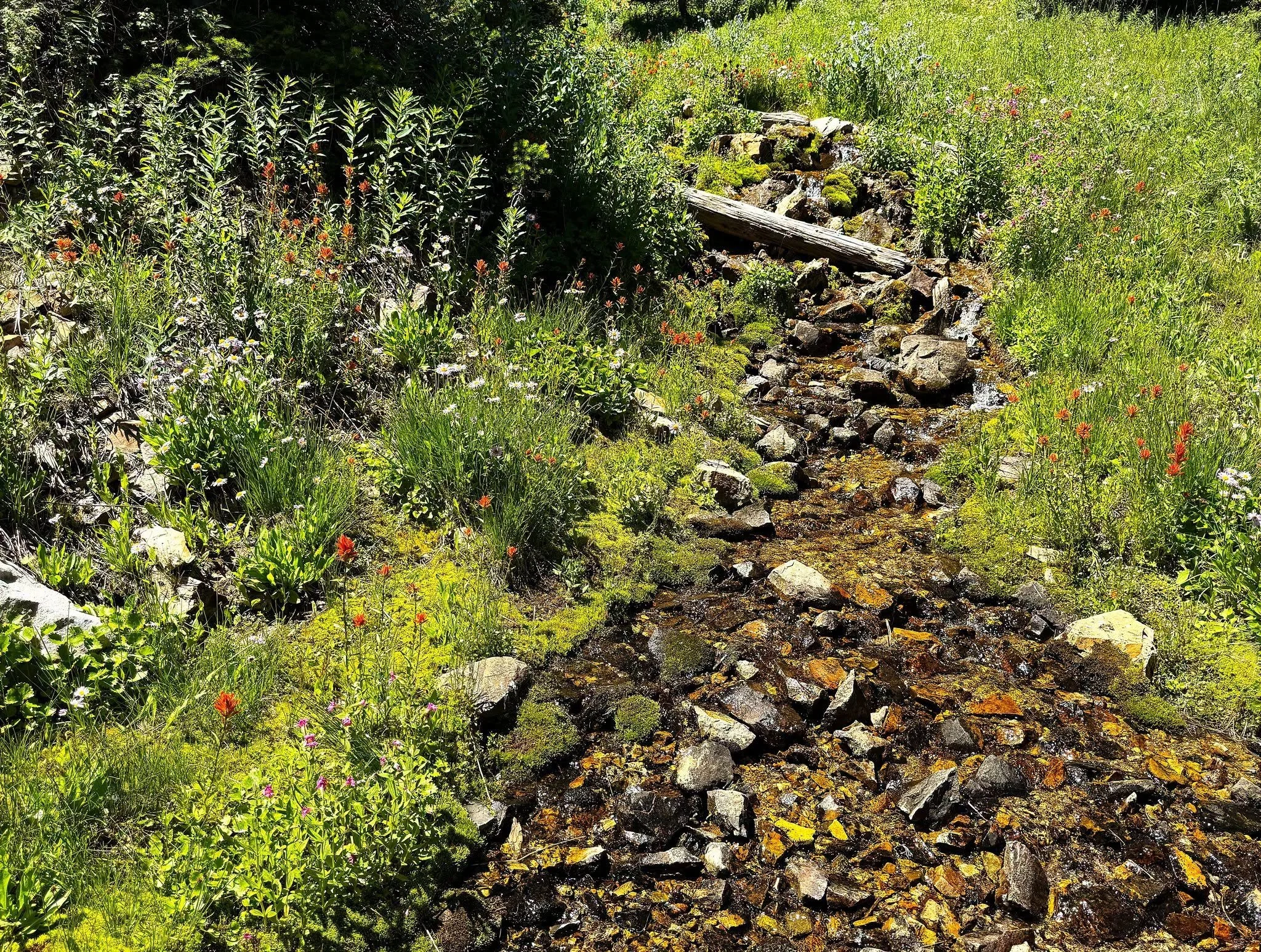

Hummingbird in flightPhotograph by Scott Gray
Ten photographs. Take your time with each.
Carry this with you
Whose attention remains
inside the way you see?
What might another person recognize
because you chose to look closely?
Golden Hour Gallery preserves the ways of seeing we inherit from one another.
Make Room for Recognition.
The light is here now.
The collection is open. Come look again.
The record beside the collection
Reading Room
Sources, makers, and the records
behind what you have seen.
About this collection
Because It Was Seen is Collection I of Golden Hour Gallery, part of Vapor & Bloom. It considers remembrance through the attention people give, receive, dispute, and carry.
The four encounters bring historical records into conversation with the Gallery’s interpretation. Room titles, transitions, the scenographer’s reflection, and Afterimage are original Gallery writing. Quotations from historical figures are identified and attributed where they appear.
These sources let you return to the records, meet their makers, and see where an account remains uncertain. Short source notes also sit beside each encounter.
Taught · Twain and Bixby
Mark Twain, Life on the Mississippi (1883), chapters VI–X. Digital edition: Project Gutenberg.
Chapter IX contains Bixby’s lesson about the reef, Twain’s remembered sunset, and his reflection on what knowledge gave and took away. Chapter X supplies the caution about drifting timber after a rise.
Twain wrote retrospectively. Bixby’s dialogue reaches us through his former student’s account; the Gallery’s reflections on attention and remembrance are its own.
Offered · Cottingley
- Arthur Conan Doyle, The Coming of the Fairies (George H. Doran, 1922), especially the preface and chapters I–II. Doyle’s photographs, correspondence, reported investigations, and argument for belief.
- National Science and Media Museum, the Cottingley Fairies account. Context for the cutouts, hatpins, later admissions, and the disagreement about the fifth photograph.
- Science Museum Group, Cottingley Fairies, Elsie Wright’s watercolors. Collection reference 1998-5145.
Doyle’s book documents his position. The Gallery distinguishes that contemporary argument from the later account of how the images were made. Frances’s continued belief in the fifth photograph is part of the record, not confirmation of its claim.
Disputed · Houdini and the Doyles
- Harry Houdini, A Magician Among the Spirits (Harper & Brothers, 1924), chapter IX, especially pp. 150–158. Source for his account of the sitting and the correspondence reproduced in the encounter.
- Harry Ransom Center, Harry Houdini: An Inventory of His Papers. Archival chronology and collection description.
- PBS American Experience, Sir Arthur Conan Doyle. Context for the friendship and widening disagreement.
- Arthur Conan Doyle, “The Riddle of Houdini,” in The Edge of the Unknown (1930). Doyle’s later interpretation of Houdini’s performances.
Houdini dates the sitting to 17 June 1922; the Ransom Center chronology gives 18 June. The encounter uses “mid-June.” The paired readings are paraphrases of accounts and correspondence, not a transcript. Letter excerpts are typeset quotations, not manuscript facsimiles.
Carried · Cook and Oliver
- Mary Oliver and Molly Malone Cook, Our World (Beacon Press, 2007). Oliver’s writing, Cook’s photographs and journal selections, and the brief Oliver excerpt used in Carried. The current publisher listing describes the 2009 paperback.
- Beacon Press, Molly Malone Cook biography. Her photographic work, gallery, and literary agency.
- PBS American Masters, how Oliver met Cook. Their meeting at Steepletop and long partnership.
- Smith College Special Collections, Molly Malone Cook papers, collection SSC-MS-00595. Holder of the original negative of My first clam (1964). The current page’s photographs are book reproductions, not scans supplied by Smith.
- Maria Popova, illustrated review of Our World, The Marginalian, 20 January 2015. Source of the reference photo reproductions used in this draft.
The Gallery’s reading of remembrance is an interpretation of the work and relationship. It does not claim to describe all of Cook’s life or all of Oliver’s influences.
Image and object credits
- Through Scott’s Eyes
- Photographs by Scott Gray. Selected and supplied by Vapor & Bloom. The accompanying portrait shows Scott Gray.
- The River
- Original interpretive artwork for Golden Hour Gallery, 2026; the 18 × 12 print composition is repeated in the entrance, Taught, and Afterimage. An imagined river, not a historical view of Twain’s Mississippi.
- Taught
- “That’s a reef.” Book illustration in Twain’s Life on the Mississippi (1883), chapter IX. Digitized by Project Gutenberg.
- Offered
- Elsie Wright, Frances and the Fairies, July 1917; Frances Griffiths, Elsie and the Gnome, September 1917. Reproductions in Doyle’s The Coming of the Fairies (1922), digitized by Project Gutenberg. The first photograph appears twice.
- Disputed
- Doyle and Houdini at the Auto Club, London: frontispiece to A Magician Among the Spirits (1924), Project Gutenberg; repeated in the closing passage. Houdini with Cecilia Steiner Weiss, Rochester, 1907 or 1908: Library of Congress, LC-USZ62-112427. Jean Conan Doyle, Bain News Service, approximately 1920–1925: Library of Congress, LC-DIG-ggbain-34152.
- Carried
- My first clam, 1964, and the boy with a telescope in New York, late 1950s: photographs by Molly Malone Cook from Our World, reproduced via The Marginalian. The clam photograph appears twice. Original negative held in the Molly Malone Cook papers, SSC-MS-00595, Smith College Special Collections. The shared Provincetown portrait comes from the same review and is by Barbara Savage Cheresh, as credited by Beacon Press. Our World cover: Beacon Press’s Mary Oliver site.
Reproduction notes
Historical photographs retain the full frames of the source reproductions used here. The River print composition is shown in full across screen sizes, including its title and Gallery mark. Repeated images return to the same source so that the reader can encounter them with a changed understanding.
Quotations are presented as text with attribution. No original séance sheets, manuscript letters, or generated reconstructions of historical photographs are presented as archival objects.
Image credits identify creators and the sources actually used. They do not imply institutional endorsement or grant visitors permission to reproduce the materials elsewhere. Rights information should be checked with the linked source for the intended use.
Working edition: the Cook and Barbara Savage Cheresh photographs shown here remain under item-specific rights review for public display. Smith’s institutional process, the uses proposed here, and rights belonging to other creators are separate considerations. See the archive’s published guidance.
Corrections and updates
This collection is a living record. If you recognize an error, can identify an uncredited maker, or know a source that would deepen an account, please write to the Keeper.
Include the encounter, image, or passage you are referring to and, where possible, a source we can consult. Corrections will be considered with care for the people and records involved.