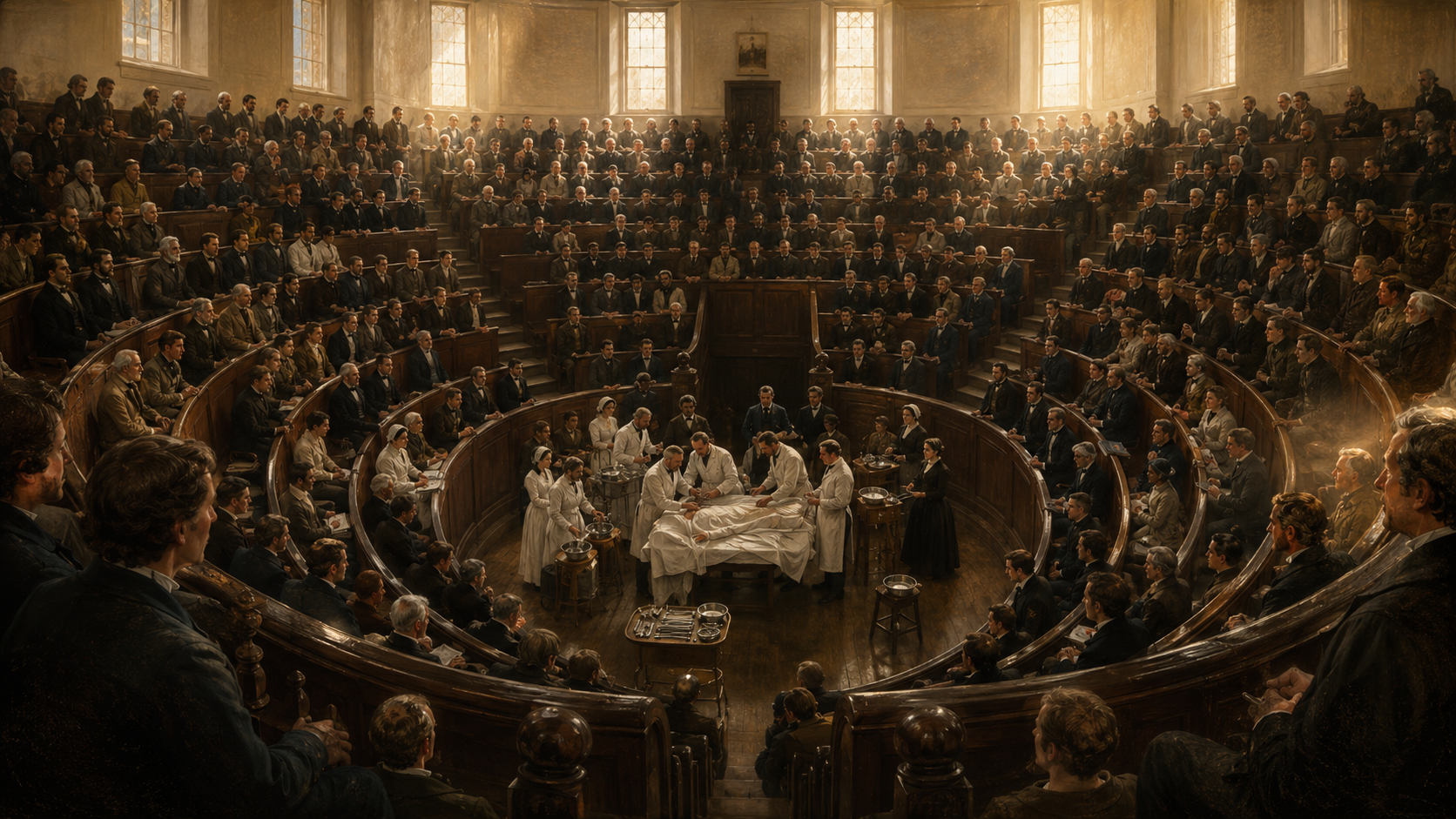
The Great Handoff
History remembers milestones.
We remember the miles between them.
What reached us was carried.
The history of painless surgery is often told as a contest for first place: one discovery, one demonstration, one name preserved.
The Great Handoff tells another story.
Here, progress appears as it was made—not in a single moment, but through an accumulation of observations, failures, borrowed knowledge, forgotten labor, and hands willing to carry unfinished work forward.
No one person owns the light.
Each received it from somewhere.
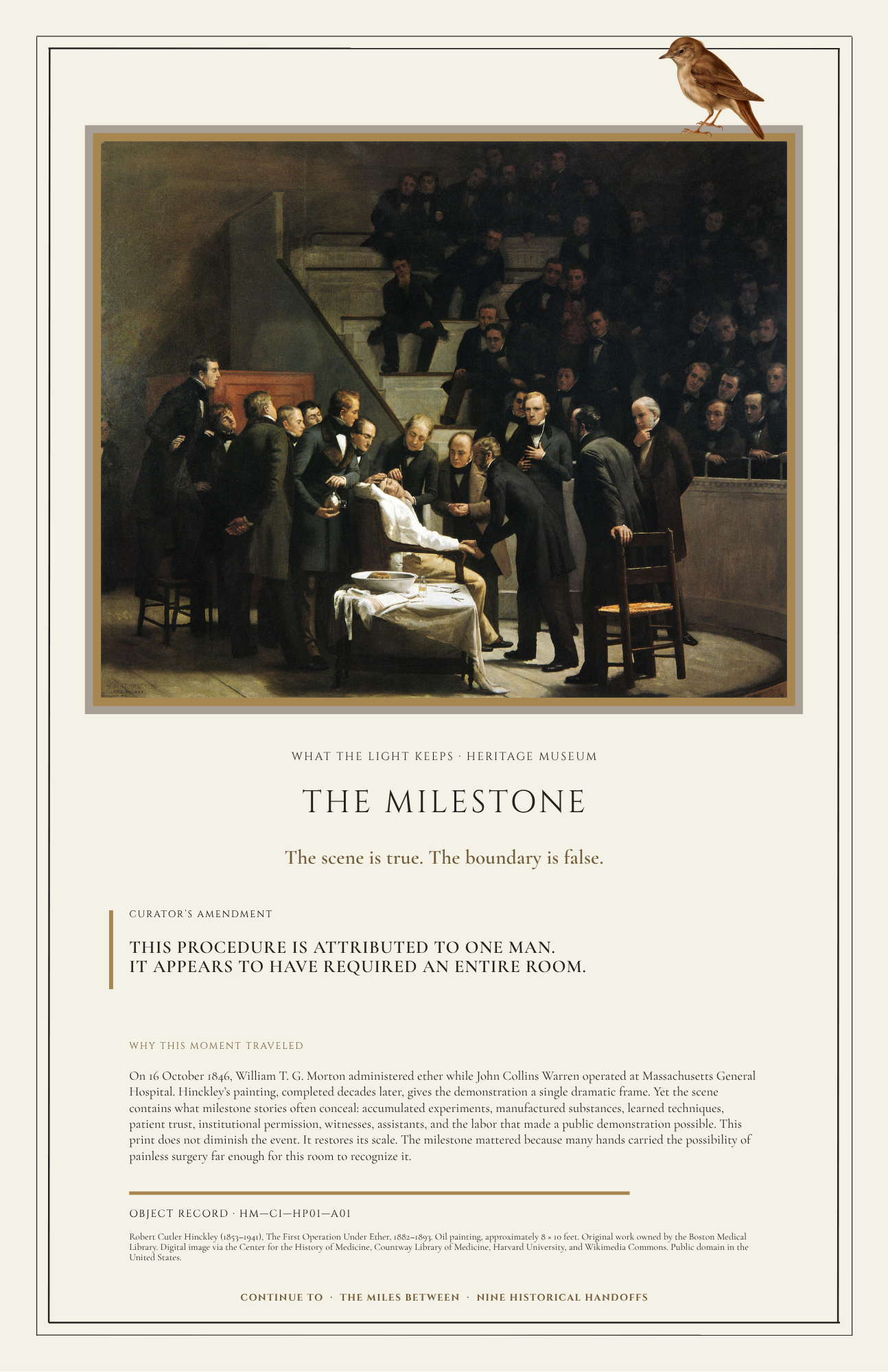
This procedure is attributed to one man. It appears to have required an entire room.
The exhibition begins before ether had a name.
A Prelude
Before Ether Had a Name
Before there was a method, there was a longing: to pass beyond pain, and return.
Begin with Keats. Let the poem hold the desire that medicine had not yet learned how to answer.
Ode to a Nightingale · John Keats · 1819
Read Ode to a Nightingale — full poem at the Academy of American Poets
THE RECORD CONTINUES
THE SURVIVING EVIDENCE
The handoffs have carried us into the room.
What remains are the objects, records, and omissions that survived it.
HERITAGE MUSEUM THE HANDS BEFORE OURS COLLECTION I
HERITAGE MUSEUM · ARCHIVE ROOM I
THE SURVIVING EVIDENCE
WHAT THE RECORD KEPT
The handoffs leave behind fragments: apparatus, testimony, published accounts, case records, and remembered observations.
These objects do not complete the story. They show what entered the record—and what did not. Each preserves a portion of the work while revealing the limits of what history chose, or was able, to keep.
Examine the record. Attend to the absences.
HERITAGE MUSEUM · WHAT THE LIGHT KEEPS
THE MILES BETWEEN
HISTORICAL HANDOFF · I
SURVIVING EVIDENCE
MESMERISM AND CONTESTED INSENSIBILITY 1779–1846

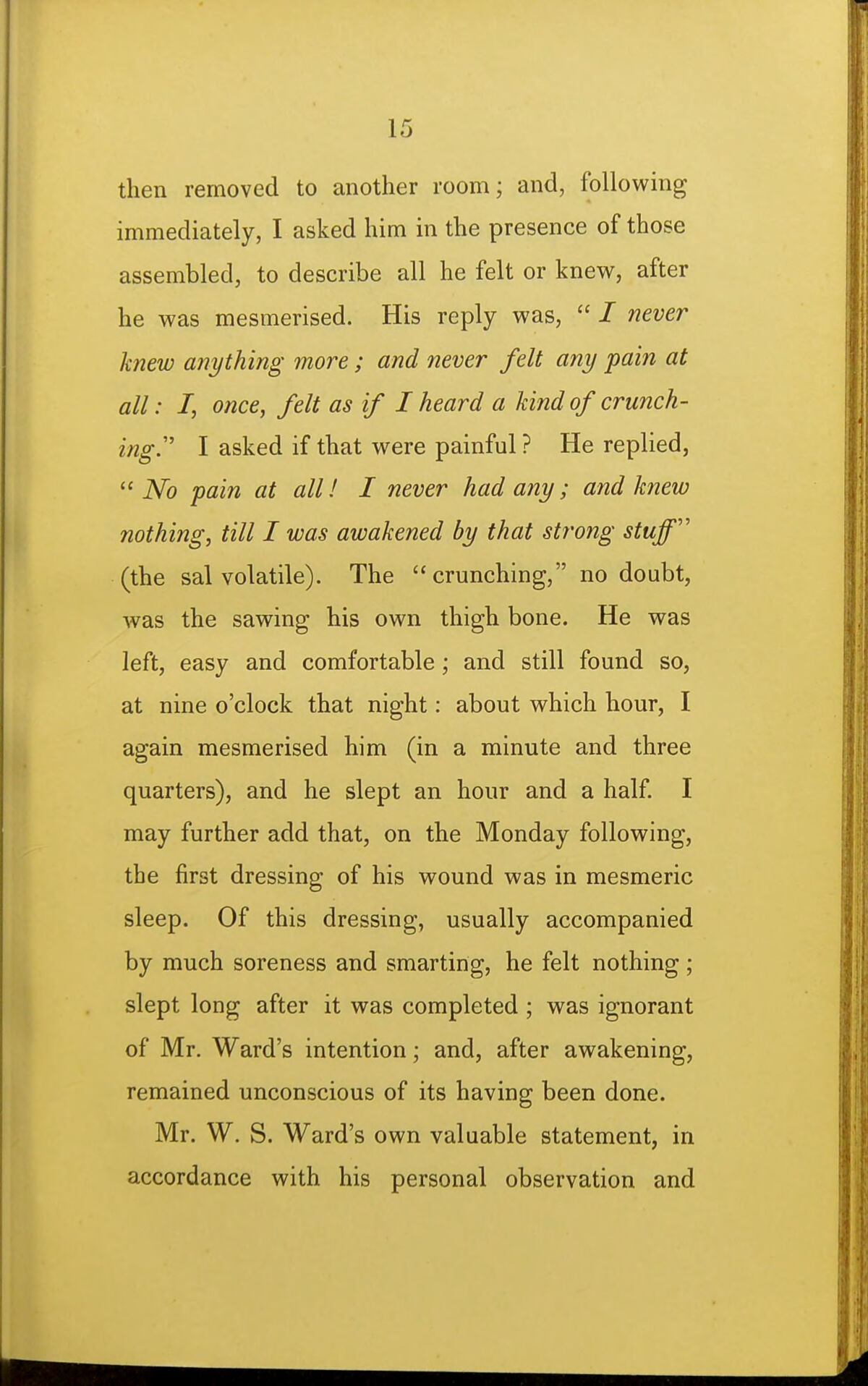
DOCUMENT ON DISPLAY
Account of a Case of Successful Amputation of the Thigh During the Mesmeric State, Without the Knowledge of the Patient
WILLIAM TOPHAM AND W. SQUIRE WARD · 1842
WHAT THIS EVIDENCE ALLOWS US TO WITNESS
These pages preserve both the published claim and the patient’s own testimony: Wombell later stated that he had felt no pain during the amputation. The account does not resolve how mesmeric insensibility worked—or whether every observer interpreted the event correctly. It allows us to witness the evidence around which a controversy formed: a surgical operation, a patient reporting an absence of pain, and medicine confronting a possibility it could not yet reliably explain.
HERITAGE MUSEUM · WHAT THE LIGHT KEEPS
THE MILES BETWEEN
HISTORICAL HANDOFF · II
SURVIVING EVIDENCE
THE AIR MADE USEABLE 1772–1799

PLATE I · APPARATUS FOR FACTITIOUS AIRS
APPARATUS ON DISPLAY
The Basic Apparatus for Producing Factitious Airs · Plate I
JAMES WATT · 1795
WHAT THIS EVIDENCE ALLOWS US TO WITNESS
This plate preserves not merely a machine, but the practical knowledge required to make an invisible substance available to other hands. Watt’s apparatus joined furnace, vessel, tubing, and gasometer into a system through which gases could be generated, cooled, collected, and contained. Each labeled component records an engineering decision that allowed Beddoes’s medical proposal to become a reproducible practice. It lets us witness the distance between discovering a substance and making it usable: the quiet work of construction, refinement, and instruction upon which Davy’s later observations depended.
HERITAGE MUSEUM · WHAT THE LIGHT KEEPS
THE MILES BETWEEN
HISTORICAL HANDOFF · III
SURVIVING EVIDENCE
THE POSSIBILITY ENTERED THE RECORD 1799–1800

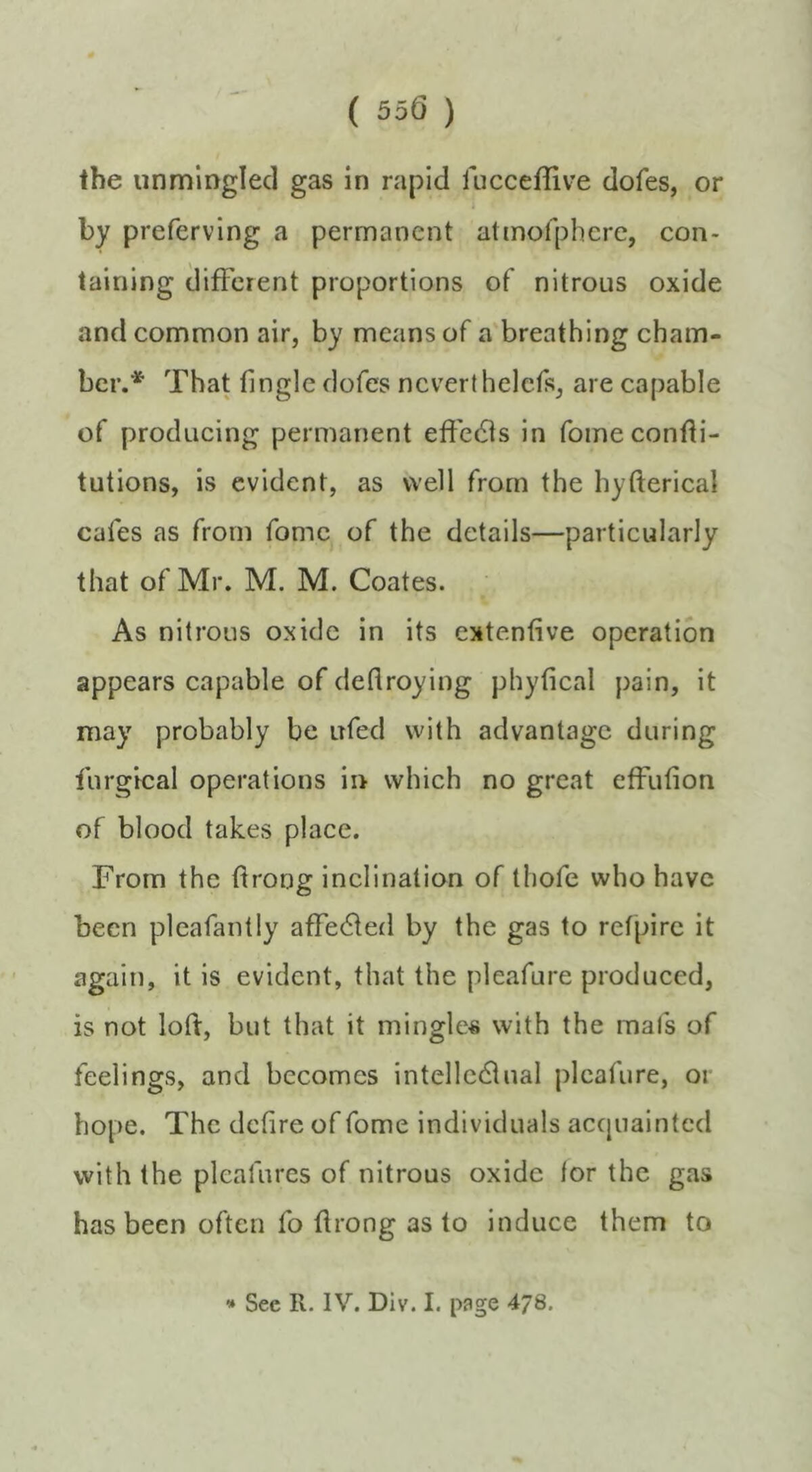
TITLE PAGE · PRINTED PAGE 556 · LONDON · 1800
DOCUMENTS ON DISPLAY
Title Page and Printed Page 556: The Name on the Volume and the Surgical Possibility Placed into the Record
HUMPHRY DAVY · 1800
WHAT THIS EVIDENCE ALLOWS US TO WITNESS
These pages preserve both the attribution and the possibility. The title page places the investigation beneath Davy’s name; page 556 records his conclusion that nitrous oxide could destroy physical pain and might be used during certain surgical operations. They do not document a completed anesthetic or an established clinical practice. They preserve the indispensable handoff Davy did complete: pain relief was observed, examined, connected explicitly to surgery, and placed into print where later hands could inherit it.
HERITAGE MUSEUM · WHAT THE LIGHT KEEPS
THE MILES BETWEEN
HISTORICAL HANDOFF · IV
SURVIVING EVIDENCE
THE EFFECT IN PLAIN SIGHT · 1540–1841


WHAT THIS EVIDENCE ALLOWS US TO WITNESS
These pages preserve the effect in plain sight. The unsigned notice compares ether directly with nitrous oxide, describes its inhalation through a tube placed in a bottle, and records the dangerous lethargy produced in one unnamed participant. The observation survived clearly enough to be repeated. The author and the people whose bodies supplied the evidence did not. Their omission is not incidental to this handoff; it is the object’s central archival fact.
HERITAGE MUSEUM · WHAT THE LIGHT KEEPS
THE MILES BETWEEN
HISTORICAL HANDOFF · V
SURVIVING EVIDENCE
THE PROOF THAT DID NOT TRAVEL · 1842–1849


WHAT THIS EVIDENCE ALLOWS US TO WITNESS
These pages preserve both Long’s proof and its delay. Page 705 opens the account seven years after his first operation. Page 707 records James M. Venable by name and describes the observation that led Long to attempt painless surgery. Page 710 preserves evidence from another operation while identifying an enslaved patient only through his owner. The procedure entered the record. The patient’s name did not. Together, the pages show that evidence may be locally convincing yet historically ineffective when it does not travel—and that even when it finally does, the record does not preserve every person equally.
HERITAGE MUSEUM · WHAT THE LIGHT KEEPS
THE MILES BETWEEN
HISTORICAL HANDOFF · VI
SURVIVING EVIDENCE
THE RESULT THE ROOM REJECTED · 1844–1847
WHAT THIS EVIDENCE ALLOWS US TO WITNESS
These pages preserve claim, failure, and disagreement within the same surviving record. Wells’s account says the gas bag was removed too soon, the patient reported some pain, and the result was denounced as an imposition. Daniel T. Curtis’s sworn testimony is less certain: he could not say whether the patient experienced pain, remembered no clear manifestation of it, and recalled only that some observers believed the event was an imposition. The room witnessed an ambiguous result. Later history hardened that ambiguity into a verdict.
HERITAGE MUSEUM · WHAT THE LIGHT KEEPS
THE MILES BETWEEN
HISTORICAL HANDOFF · VII
SURVIVING EVIDENCE
THE MOMENT THAT TRAVELED · 1846
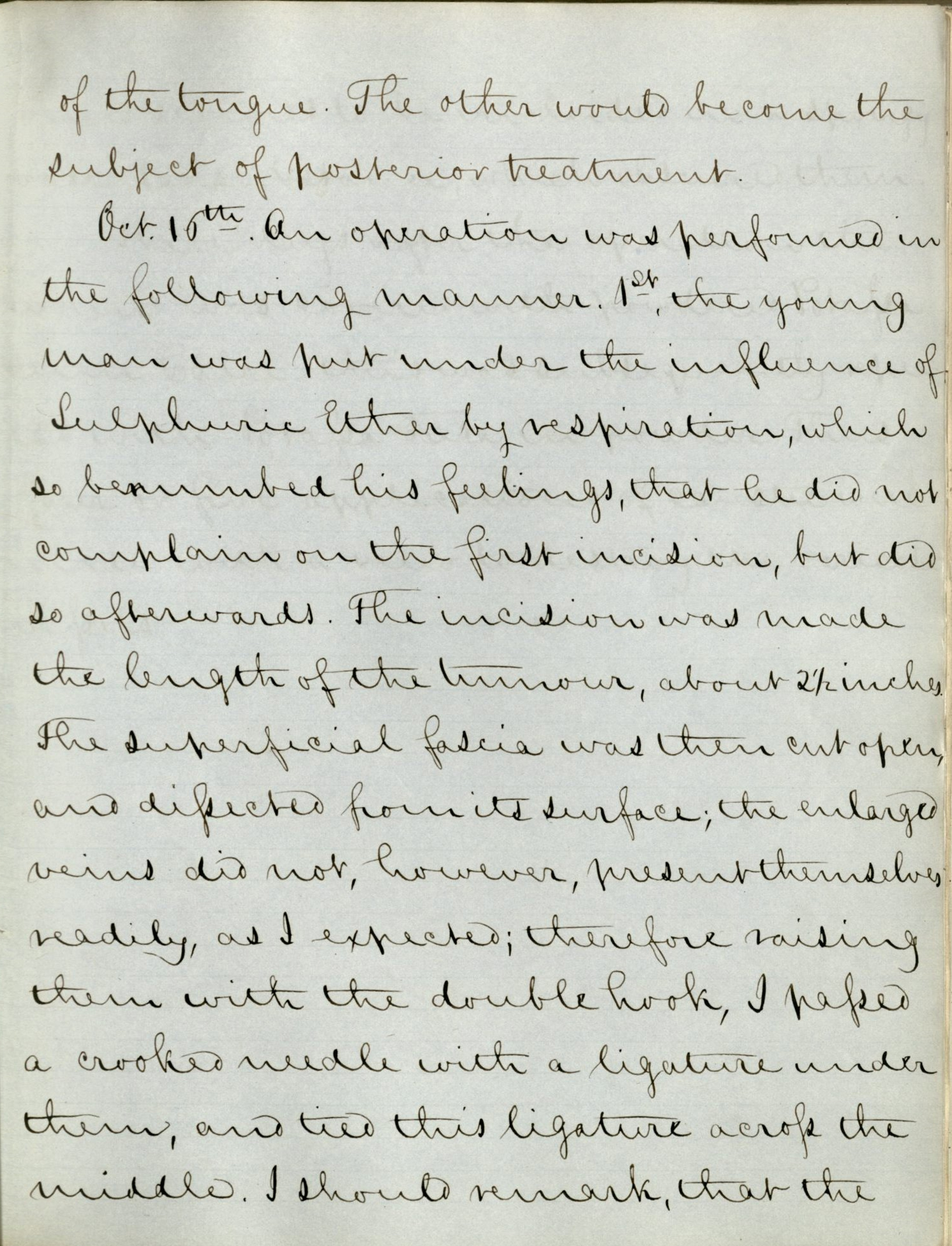

WHAT THIS EVIDENCE ALLOWS US TO WITNESS
These three records preserve the conditions that allowed one anesthetic result to travel. Warren’s case notes preserve an account of Abbott’s operation at Massachusetts General Hospital. Warren’s same-day diary preserves the event as witnessed by the operating surgeon. Bigelow’s printed report carried the evidence beyond the amphitheater, allowing people who had not entered the room to evaluate and repeat what occurred there. Patient, institution, and transmission—not a single heroic figure—made the moment historically portable.
HERITAGE MUSEUM · WHAT THE LIGHT KEEPS
THE MILES BETWEEN
HISTORICAL HANDOFF · VIII
SURVIVING EVIDENCE
THE PRACTICE LEARNED TO MEASURE · 1847–1858
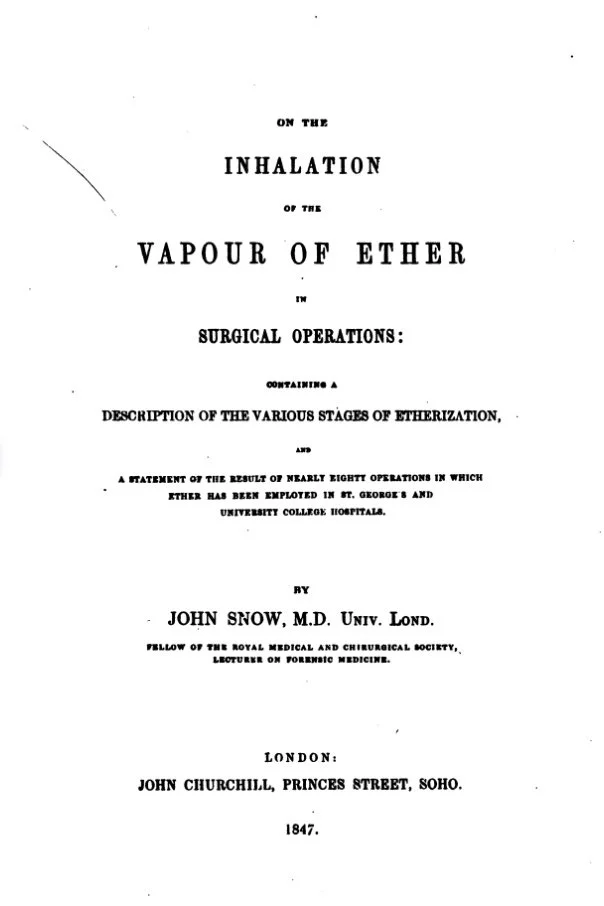


WHAT THIS EVIDENCE ALLOWS US TO WITNESS
These pages preserve anesthesia becoming a measured practice. The title page announces results drawn from nearly eighty operations rather than a single dramatic event. Snow’s illustrated inhaler makes controlled administration visible: vapor strength could be adjusted through apparatus, temperature, and observation. The table converts those observations into comparable quantities that another practitioner could examine and use. Together, the pages show knowledge becoming portable through accumulated cases, regulated delivery, illustration, calculation, and print. The machine did not replace attention. It gave attention a repeatable form.
HERITAGE MUSEUM · WHAT THE LIGHT KEEPS
THE MILES BETWEEN
HISTORICAL HANDOFF · IX
SURVIVING EVIDENCE
THE HANDS THAT MADE IT ORDINARY · 1846 ONWARD
WHAT THIS EVIDENCE ALLOWS US TO WITNESS
These records did not preserve every patient equally. Long’s article identifies an enslaved patient through Mrs. Hemphill’s ownership while leaving the patient unnamed. Wells describes the Boston extraction without preserving the patient’s identity. Countway’s catalog identifies the patient in Warren’s case notes as Gilbert Abbott. The displayed excerpt describes his operation but does not itself include his name. The contrast does not show that the named patient contributed more. It shows that identity entered the historical record selectively, shaped by ownership, institutional practice, and unequal power. Where a name survives, we preserve it. Where it does not, we preserve the absence without inventing what the evidence cannot supply.
THE RECORD DID NOT FORGET EVERYONE EQUALLY.
HERITAGE MUSEUM · COLLECTION I
THE OMISSIONS
THE RECORD IS NOT EMPTY. IT IS INCOMPLETE.
What survives tells us what happened.
Its silences tell us whose presence was not considered
worth preserving.
THE NAMES
Some patients entered the record by name. Others appear only as “a boy,” “a patient,” or through the name of the person who claimed ownership of them.
Their absence from the record is not evidence that they were absent from the room.
THE LABOR
Apparatus had to be built. Ether had to be prepared. Patients had to be carried, positioned, watched, cleaned, and cared for afterward.
Much of that labor survives only through the procedure it made possible.
THE CONSENT
The records describe what was administered and what the operator observed. They rarely preserve what the patient was told, what choices were available, or whether refusal was possible.
THE TESTIMONY
Pain was often recorded through someone else’s interpretation. A cry, movement, silence, or later recollection became evidence only after another person decided what it meant.
HERITAGE MUSEUM · THE HANDS BEFORE OURS
WHAT REACHED US
THE RECORD COULD NOT PRESERVE EVERY HAND. THE PRACTICE STILL CARRIES THEIR WORK.
No single discovery brought us into the modern operating room.
We arrived through accumulated observations, failed demonstrations, repeated experiments, constructed apparatus, published evidence, patient testimony, institutional memory, and labor the record did not always consider worth naming.
Some hands entered history.
Others entered only the work.
BUT THE HANDOFF CONTINUED.
Every time a patient releases consciousness,
the room fills again—
with knowledge carried forward,
with attention learned through consequence,
with practiced hands accepting responsibility
for the person who can no longer watch for themselves.
THE HANDS BEFORE OURS DID NOT HAND US A DISCOVERY.
THEY HANDED US A RESPONSIBILITY.
THE HANDOFF DID NOT END IN 1846.
IT REACHED US.
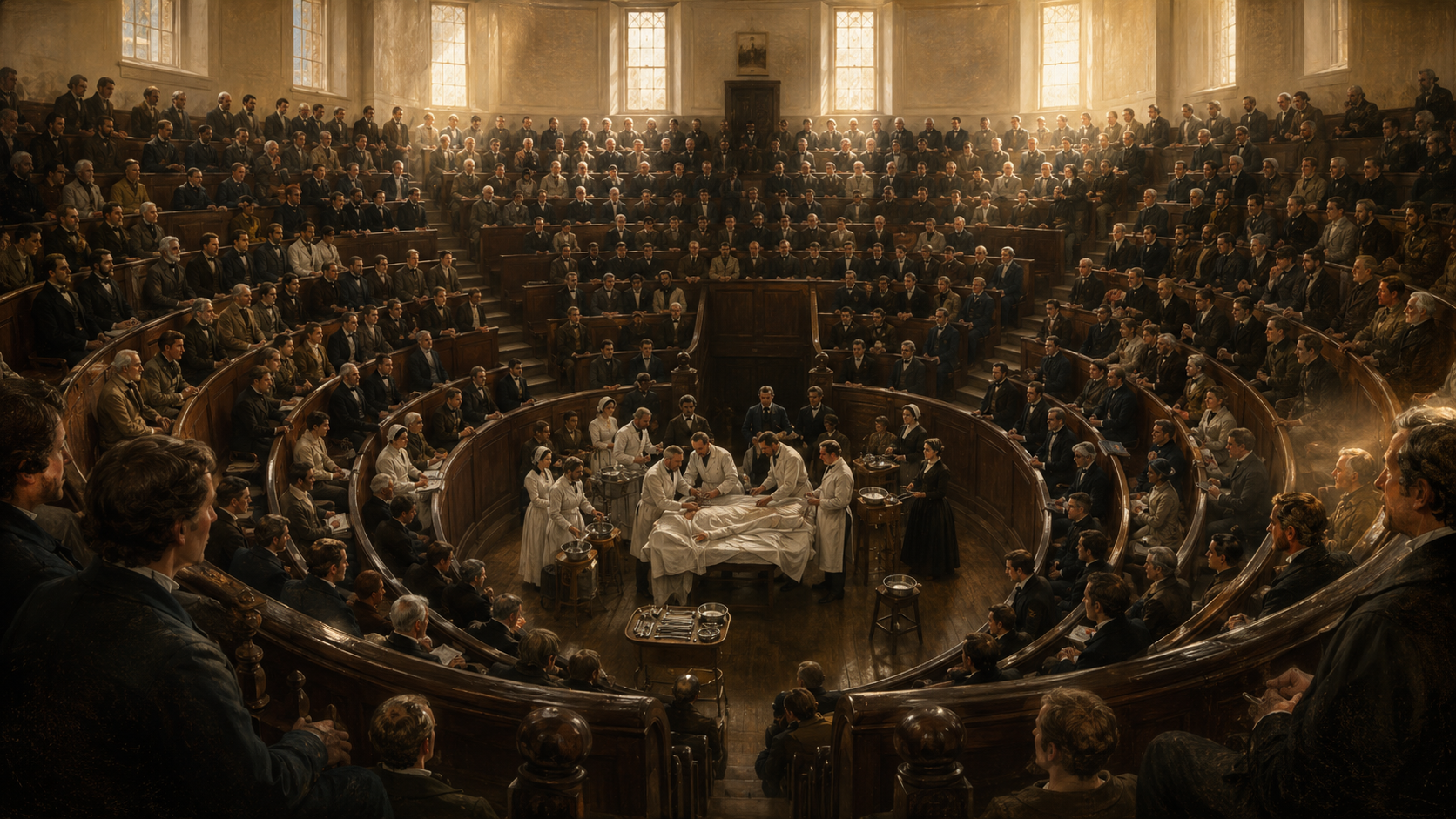
HERITAGE MUSEUM · COLLECTION I
THIS PROCEDURE IS ATTRIBUTED TO ONE MAN. IT APPEARS TO HAVE REQUIRED AN ENTIRE ROOM.
EVERY SEAT WAS OCCUPIED.
THE HANDOFF CONTINUES.
HM—CI—FR01 · THE FINAL ROOM · THE HANDS BEFORE OURS
RETURN TO THE MUSEUMObjects from this collection
Carry the handoff forward
The exhibition continues in print: a view of the room, a record of the handoffs, and paper objects to keep close.